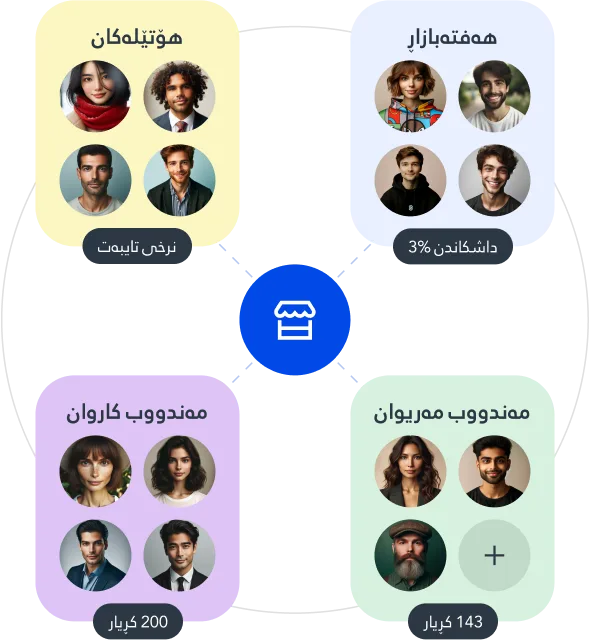
Many businesses start with accounting software and eventually hit a wall.
They begin asking why everything feels disconnected, why they cannot see the whole business in one place, and why managing operations keeps getting harder.
That is when ERP enters the conversation.
In this guide, we break down ERP versus accounting software, explain the key differences, and help you decide which one your business actually needs.
Key takeaways
- Accounting software focuses on financial tracking, while ERP connects finance with sales, inventory, operations, and more.
- The biggest difference is not just features, it is integration, visibility, and the ability to manage the whole business in one place.
- Growing businesses usually outgrow accounting software when operations become fragmented and decision-making slows down.
What is accounting software?
Accounting software is designed to help businesses manage financial transactions. It focuses on recording income and expenses, managing invoices and payments, tracking receivables and payables, and generating financial reports.
Its main purpose is financial tracking. It helps businesses understand what is happening financially, but it usually stops there.
What is ERP software?
ERP stands for Enterprise Resource Planning. ERP software goes beyond accounting by connecting and managing major business operations in one system.
That usually includes accounting, sales and CRM, inventory and warehouses, purchasing and suppliers, HR, and operations. ERP is not just a finance tool. It is a complete business management system.
ERP vs accounting software: key differences
The difference between ERP and accounting software is not just about size. It is about scope, visibility, automation, and how connected your business processes are.
Accounting software helps you track finances. ERP helps you run the business more systematically.
1. Scope of functionality
Accounting software focuses on finance. ERP software covers all major departments and workflows across the business.
That means ERP gives management a broader operating view and more tools to coordinate work across teams.
2. Integration
Accounting software is often separate from other tools. Businesses may use one tool for finance, another for inventory, another for sales, and spreadsheets to connect the gaps.
ERP is fully integrated. For example, a sale can update inventory and accounting automatically without duplicate entry or manual syncing.
3. Real-time visibility
Accounting software gives financial visibility. ERP gives full business visibility across sales, stock, operations, and finance.
That complete picture helps leaders understand not just what happened financially, but what is happening operationally right now.
4. Automation
Accounting software usually offers limited automation focused on bookkeeping and reporting tasks.
ERP supports end-to-end automation across workflows, which helps reduce manual work, speed up operations, and lower error risk.
5. Scalability
Accounting software can work well for smaller businesses with simple operations, but it often becomes limiting as complexity grows.
ERP is built for businesses that are scaling, adding departments, managing more transactions, and needing stronger process control.
6. Decision-making power
Accounting software helps businesses understand finances. ERP helps businesses run and optimize the whole operation.
That makes ERP much more powerful for strategy, planning, and operational improvement.
When accounting software is enough
Accounting software may be enough if you are a very small business, your operations are simple, you do not manage inventory or sales teams, and you do not need real-time operational visibility.
It can be a strong starting point, especially in the early stage when complexity is low.
When you need ERP
You should consider ERP when you are using multiple tools, managing inventory and warehouses, coordinating sales teams or field agents, needing real-time data, or growing into more operational complexity.
If the business feels messy, disconnected, or hard to control, ERP usually becomes the natural next step.
The biggest limitation of accounting software
Accounting software mainly answers one question: what happened financially?
It usually does not answer why it happened, what is happening in sales, where stock is located, or what the business should do next. That is where ERP becomes essential.
Why businesses transition to ERP
As businesses grow, they realize accounting alone is not enough. Operations become disconnected, reporting slows down, and decision-making gets harder.
ERP solves that by bringing everything together in one connected system.
Common mistake: waiting too long
Many businesses delay ERP adoption and try to manage growth using Excel, manual processes, and disconnected tools for too long.
That usually leads to more errors, more inefficiency, and more missed opportunities. The best time to move is before complexity gets out of control.
How Bruska helps businesses move beyond accounting software
With Bruska ERP, businesses can manage accounting, sales, inventory, and operations in one system, track the business in real time, and replace multiple disconnected tools with one platform.
Bruska is especially practical for FMCG and distribution businesses that need fast implementation, cost efficiency, ease of use, and support for Kurdish, Arabic, and English teams.
Conclusion
Accounting software helps you track your business. ERP software helps you run your business.
That is the key difference.
If your goal is more control, more efficiency, and stronger growth, ERP becomes the natural next step. Businesses that move beyond fragmented tools usually gain better visibility, better discipline, and better decision-making across the whole company.
 Bruska ERP
Upgrade from accounting to full control
Book a demo with Bruska ERP and see how your business can manage accounting, sales, inventory, and operations in one connected system.
more than 1,000 companies trust us









































More from Bruska
Continue reading
ERP
ERP Software for Iraqi FMCG Companies
Learn why Iraqi FMCG companies are adopting ERP software and what features matter most for distribution, inventory, finance, and field operations.
Read article
ERP
Best ERP Software in Kurdistan
Explore what makes the best ERP software in Kurdistan, what features matter most today, and why localized, modern systems are gaining traction.
Read article
ERP
The Hidden Cost of Not Having an ERP System
Learn the hidden costs of running a business without ERP, from manual work and poor visibility to weak scalability, missed sales, and leadership burnout.
Read article