
Managing money coming in and going out is one of the most critical parts of running a successful business.
Yet many companies struggle with tracking who owes them money, accounts receivable, and who they owe, accounts payable. The result is cash flow pressure, missed payments, confusion, and unnecessary stress.
In this guide, we show you how to properly track accounts payable and receivable, and how to turn that process into a system that actually helps your business grow.
Key takeaways
- Accounts receivable and accounts payable need consistent tracking, not month-end cleanup.
- Clear payment terms, centralized records, and regular follow-up improve cash flow control.
- Real-time systems reduce manual errors and make AP and AR easier to manage at scale.
What are accounts payable and receivable?
Before improving the process, it helps to keep the basics simple. Accounts receivable, or AR, is the money your customers owe you. Accounts payable, or AP, is the money you owe suppliers or vendors.
If you do not manage both properly, your business can lose financial control very quickly. Money may come in late, payments may go out at the wrong time, and management may not have a clear picture of cash flow.
Why proper tracking matters
Poor tracking causes late customer payments, missed supplier deadlines, cash shortages, and inaccurate financial reporting. Those issues create pressure across the whole business, not just inside accounting.
On the other hand, proper tracking gives you clear visibility into cash flow, stronger financial planning, and healthier relationships with both customers and suppliers.
1. Always record transactions immediately
One of the biggest mistakes is delaying invoice or bill entry. The longer you wait, the more likely it becomes that records will be incomplete, duplicated, or forgotten.
The fix is simple: record invoices as soon as they are issued and log supplier bills as soon as they are received. Avoid the habit of saying you will do it later because that is how chaos builds.
- Record invoices immediately after issuing them.
- Log supplier bills as soon as they arrive.
- Prioritize speed of entry to keep financial data accurate.
2. Use clear payment terms
Many payment problems begin with unclear expectations. When due dates are not defined properly, customers delay payment and teams spend more time following up manually.
Set clear payment terms such as Net 7, Net 15, or Net 30. Communicate them upfront and include due dates on every invoice.
- Set payment terms clearly from the beginning.
- Make sure due dates appear on every invoice.
- Use consistent terms across customers when possible.
3. Track every invoice and bill in one place
Using scattered tools like Excel files, WhatsApp messages, paper notes, or separate documents creates missing records and duplicate work.
A centralized system gives you one source of truth. That means you can see all invoices, bills, due dates, and statuses without searching through disconnected tools.
- Use one centralized system for AP and AR.
- Keep a single source of truth for invoices and bills.
- Reduce duplication and missing entries.
4. Monitor aging reports
An aging report shows how long invoices or bills have been outstanding. For receivables, it tells you who has not paid and how late they are. For payables, it shows what you owe and what is due soon.
Reviewing aging reports weekly helps teams focus on overdue invoices and prepare upcoming payments before they become urgent problems.
- Review aging reports every week.
- Prioritize overdue receivables.
- Plan payables based on upcoming due dates.
5. Follow up on late payments consistently
Some businesses issue invoices and then wait too long before following up. That delays cash collection and teaches customers that late payment has no consequence.
A better approach is to send reminders before and after due dates. Follow-up should be consistent and professional, not aggressive but still firm.
- Send reminders before due dates.
- Follow up again after invoices become overdue.
- Automate reminders whenever possible.
6. Schedule your payments strategically
Paying every supplier bill immediately is not always smart, and paying too late creates different problems. Businesses need a balanced approach.
Pay on or near due dates, maintain a payment calendar, and avoid early payments unless there is a strategic reason to do so. This helps preserve cash inside the business.
- Pay on or near due dates.
- Keep a clear payment calendar.
- Avoid unnecessary early payments.
7. Reconcile regularly
Tracking invoices and bills is not enough by itself. You also need to verify that your records match what has actually been paid or received.
Reconciliation means matching invoices with customer payments, matching bills with bank transactions, and identifying missing or incorrect entries quickly.
- Match invoices against received payments.
- Match bills against bank transactions.
- Investigate inconsistencies immediately.
8. Avoid manual errors
Manual entry mistakes seem small in the moment, but they often create larger reporting and payment problems later. A wrong due date, duplicated invoice, or incorrect amount can affect cash flow decisions.
The best fix is to reduce manual processes as much as possible and use automation where it makes sense.
- Reduce manual entry where possible.
- Use automated workflows and reminders.
- Double-check critical entries before posting them.
9. Keep customer and supplier records organized
Incomplete records make follow-up harder and decision-making weaker. If contact details, payment history, or supplier information are scattered, teams waste time and miss context.
Well-maintained records help you understand who pays late, which suppliers require closer attention, and where financial friction is happening.
- Keep contact details updated.
- Track payment history clearly.
- Use organized profiles for customers and suppliers.
10. Use real-time tracking tools
The biggest upgrade many businesses can make is moving away from outdated tracking methods. Real-time systems let you see who owes you, what you owe, and how cash is moving without waiting for manual updates.
With modern tools, teams can also automate reminders, generate reports faster, and work with more confidence.
- See receivables and payables instantly.
- Track cash flow in real time.
- Automate reminders and reporting.
Common mistakes to avoid
Even when businesses understand AP and AR conceptually, they often fall into the same operational traps. Forgetting invoice follow-up, losing track of supplier payments, relying only on spreadsheets, skipping report reviews, and waiting until month-end all reduce financial control.
The best systems are built on consistency. Small actions done regularly are more effective than large corrections done too late.
How Bruska helps simplify AP and AR
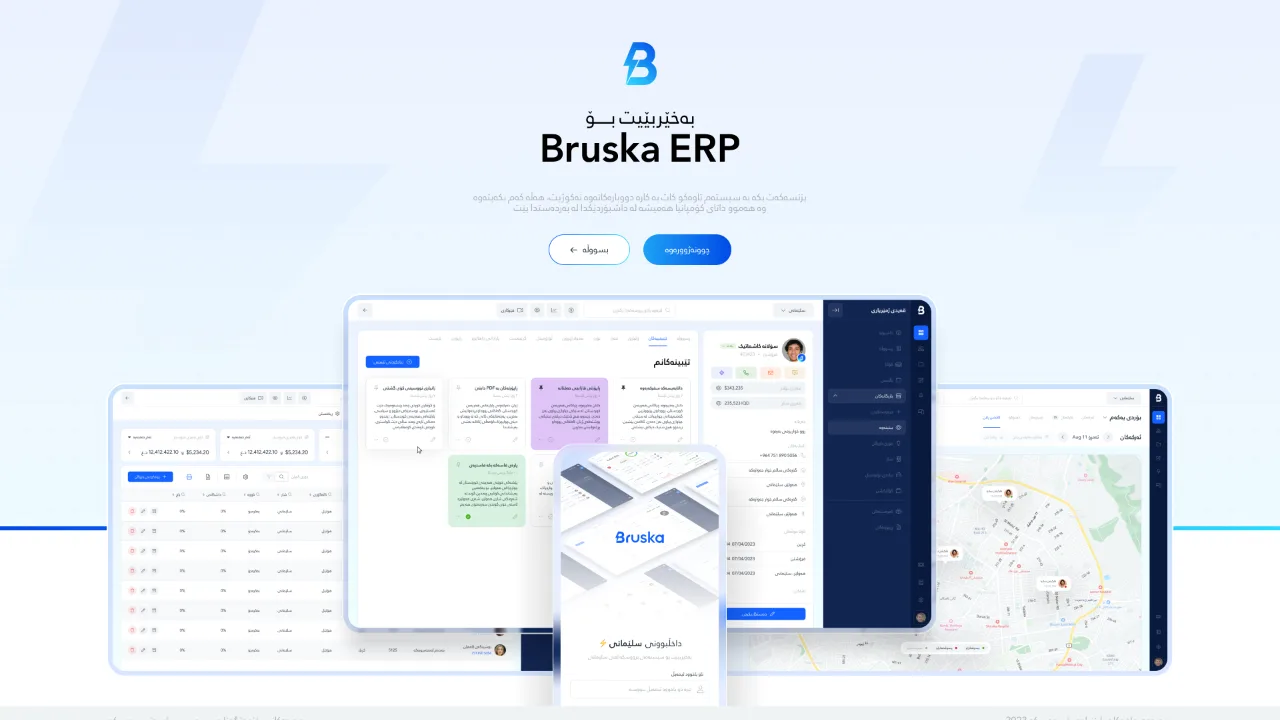
With Bruska ERP, businesses can track receivables and payables from one dashboard, receive reminders for due payments, access real-time financial data, and generate aging reports quickly.
That means less time juggling spreadsheets and manual lists, and more time operating with clarity and control.
Conclusion
Tracking accounts payable and receivable is not just an accounting task. It is a core part of managing your business effectively. When it is done right, you gain stronger control over cash, make better financial decisions, and reduce stress across the company.
Businesses that grow well do not only make sales. They manage their money intelligently too.
 Bruska ERP
Simplify AP and AR with the right system
Book a demo with Bruska ERP and see how your business can track receivables and payables in one place with real-time visibility.
more than 1,000 companies trust us













































More from Bruska
Continue reading
Accounting
Best Accounting Software for Businesses in Iraq
Explore the best accounting software options for businesses in Iraq and learn what matters most in localization, usability, integration, and real-time financial control.
Read article
Accounting
Top 10 Accounting Mistakes Businesses Make (And How to Fix Them)
Many businesses struggle with basic accounting discipline. These common mistakes hurt cash flow, reporting, and decision-making, but each one can be fixed with better systems and routines.
Read article
Accounting
What is Accounting Software and Why Your Business Needs It
Accounting software helps businesses track, manage, and understand finances in one system. This guide explains how it works and why it becomes essential as a business grows.
Read article